
The 8 Numbers That Predict Your Healthspan
March 10, 2026
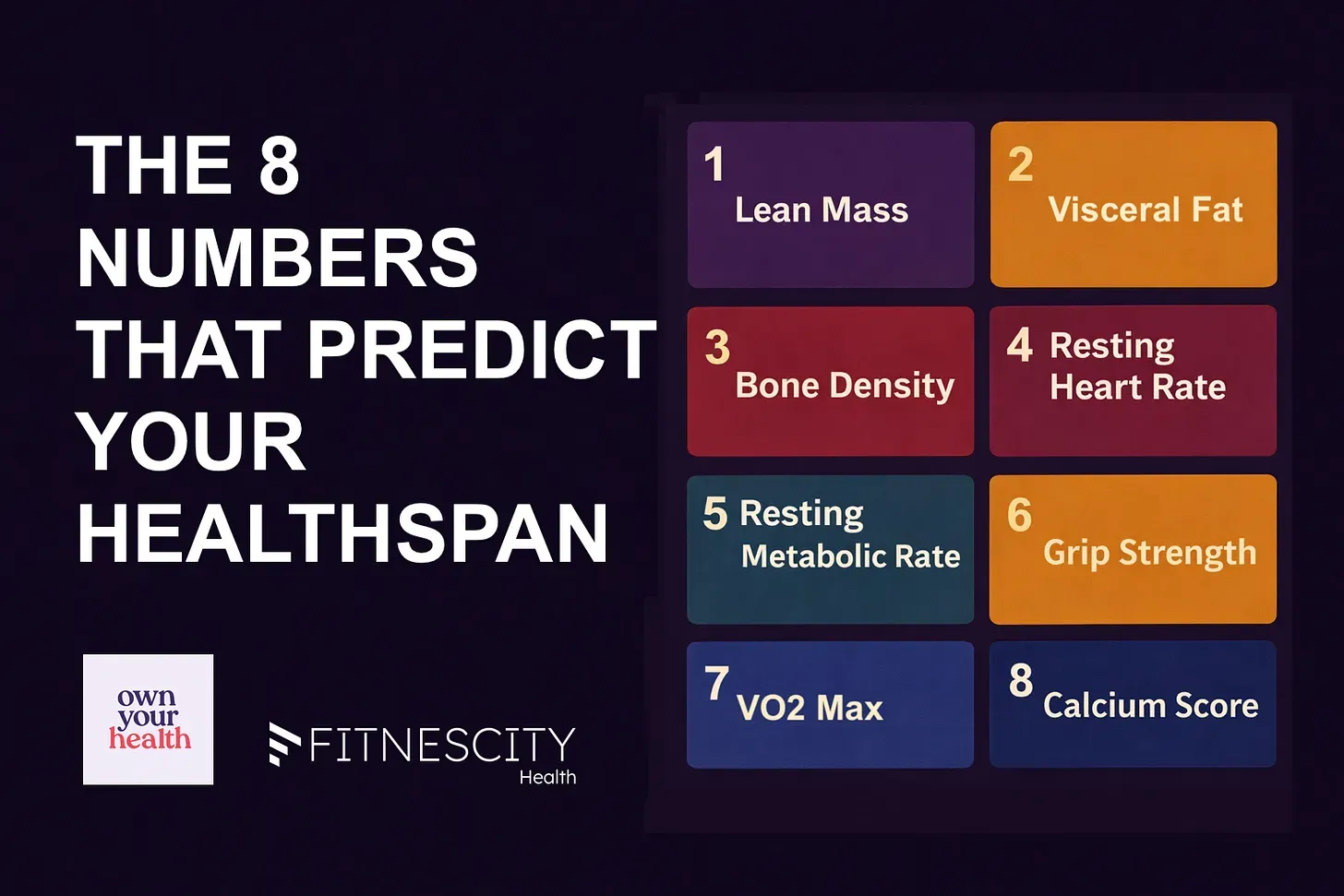
When most people think about their health, they focus on familiar numbers: cholesterol, blood pressure, and blood sugar.
These markers matter. But many of them detect disease only once it has already begun to develop.
Healthspan, the number of years we remain healthy, strong, and independent, is influenced by a different set of factors.
These metrics measure how the body is built and how it performs: muscle mass, bone density, metabolic function, cardiovascular fitness, and structural heart risk.
Unlike many traditional lab markers, these numbers often begin to change decades before symptoms appear.
Here are eight measurements that research consistently links to long-term health and longevity.
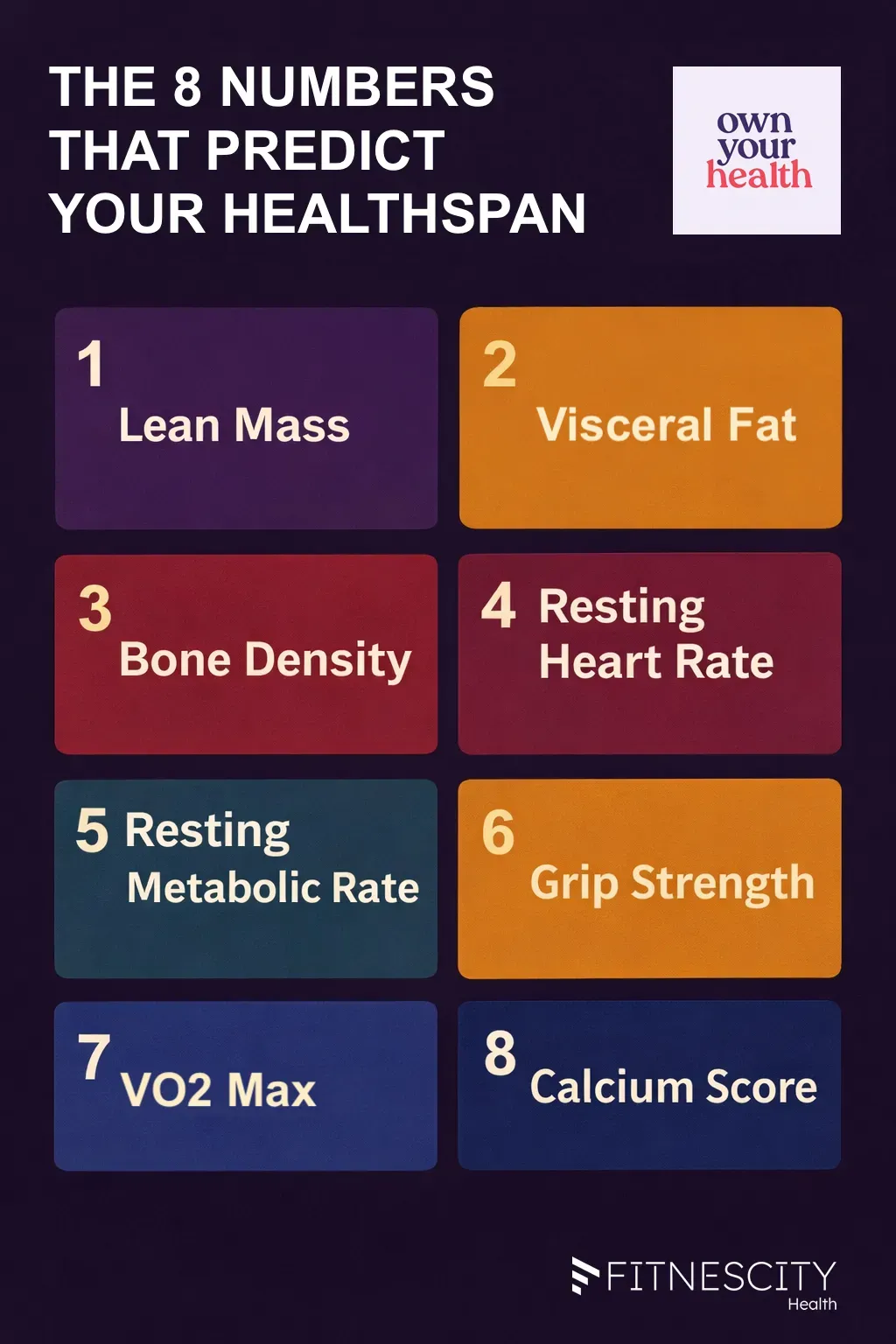
1. Lean Muscle Mass
Muscle is one of the body’s most important organs for long-term health.
Beyond strength and appearance, muscle plays a central role in metabolism, glucose regulation, mobility, and injury prevention.
Higher levels of lean muscle mass are associated with lower risk of metabolic disease, better physical resilience with aging, and greater independence later in life.
Yet muscle loss often begins earlier than most people realize, gradually accelerating over time if it is not actively maintained.
2. Visceral Fat
Fat stored around the organs carries far greater risk than fat under the skin.
Visceral fat accumulates deep inside the abdomen around vital organs such as the liver and pancreas.
Unlike subcutaneous fat, it is metabolically active and strongly associated with insulin resistance, cardiovascular disease, and chronic inflammation.
Two people with the same weight or body mass index can have dramatically different levels of visceral fat — and very different long-term health risks.
3. Bone Density
Bone strength quietly declines for many people long before fractures occur.
Bone density reflects the structural strength of the skeleton.
Lower bone density increases the risk of fractures, mobility limitations, and long-term disability later in life.
Because bone loss typically happens silently over many years, early measurement is one of the few ways to identify risk before problems appear.
4. Resting Heart Rate
A lower resting heart rate generally reflects a more efficient cardiovascular system.
Resting heart rate measures how many times the heart beats per minute at rest.
Higher resting heart rates are associated with increased risk of cardiovascular disease and all-cause mortality, while lower rates often reflect stronger cardiovascular conditioning.
It is one of the simplest indicators of overall cardiovascular efficiency.
5. Resting Metabolic Rate (RMR)
Your metabolic rate reflects how much energy your body needs just to function.
Resting metabolic rate represents the number of calories the body burns at rest to sustain basic physiological processes.
It is closely linked to lean muscle mass and metabolic health.
As muscle declines, metabolic rate often declines as well, which can influence weight regulation and metabolic resilience over time.
6. Grip Strength
Grip strength is one of the simplest yet most powerful indicators of physical resilience.
Large population studies have shown that lower grip strength is associated with a higher risk of cardiovascular disease, functional decline, and mortality.
Because it reflects neuromuscular health, grip strength often serves as an early signal of broader physical deterioration.
7. VO2 Max
Among all cardiovascular fitness measurements, VO2 Max consistently ranks among the strongest predictors of longevity.
VO2 Max measures the maximum amount of oxygen the body can use per minute per kilogram during exercise.
Higher levels of cardiorespiratory fitness are strongly associated with lower risks of cardiovascular disease, metabolic disorders, and premature mortality.
Unlike many risk factors, VO2 Max is also highly trainable. Even modest improvements in aerobic fitness can significantly improve long-term health outcomes.
8. Coronary Artery Calcium (CAC)
The calcium score measures actual plaque buildup inside the arteries of the heart.
A coronary artery calcium scan detects calcified plaque inside the coronary arteries.
Among imaging tests available today, CAC scoring is one of the strongest predictors of future heart disease.
Rather than estimating risk from indirect markers, the test measures the presence of plaque itself, often revealing cardiovascular risk years before symptoms appear.
Why These Numbers Matter
Most health assessments focus on markers that change once disease processes are already underway.
But the body often begins to change long before that point.
Muscle slowly declines, visceral fat accumulates, physical fitness decreases, and bone density weakens.
These structural and functional measurements provide a clearer window into how the body is aging — and often reveal risk decades earlier than conventional screening.
Healthspan is not determined by a single number. It emerges from a combination of factors that influence how strong, metabolically healthy, and resilient the body remains over time.
The earlier these numbers are measured and tracked, the greater the opportunity to influence their trajectory.
Fitnescity Health is the world’s largest platform for health and wellness tests such as DEXA body composition scans, VO2 Max testing, cardiac calcium scoring, metabolic assessments, and more.
Through a national network of over 1,000 medical and performance centers, Fitnescity Health makes it easier to measure the numbers that matter most.
Because prevention works best when we measure what changes first.