
We Can Measure Heart Risk in Your 30s. Medicine Waits Until Your 60s.
February 2, 2026
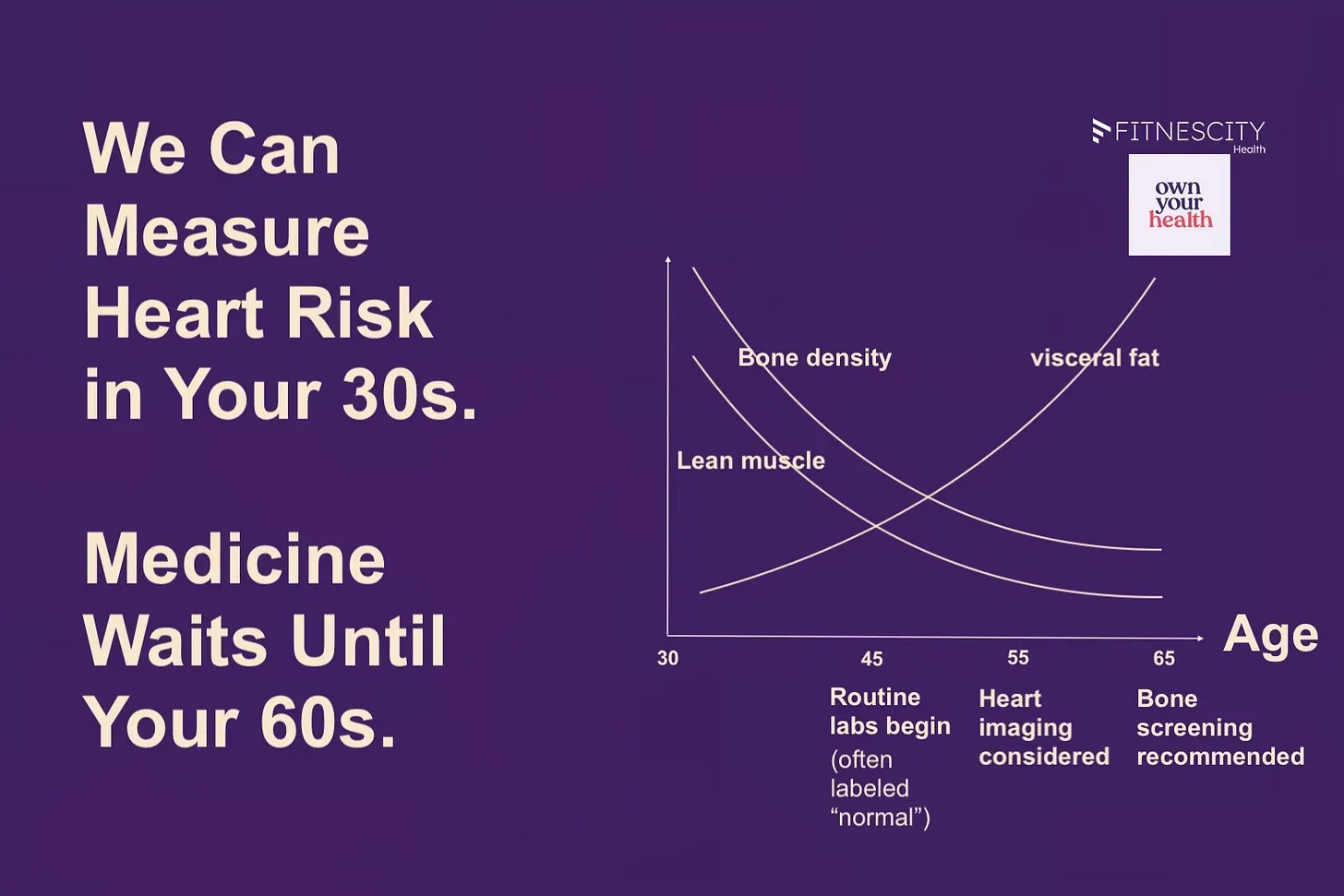
By the time heart risk is routinely taken seriously, decades of structural change have already taken place.
Most people believe heart health is something you monitor later in life. You get your cholesterol checked and watch your blood pressure. If those numbers come back “normal,” you’re told you’re fine.
But the body doesn’t wait.
Heart risk doesn’t start in your 60s
The problem isn’t that we can’t see these changes. It’s that we don’t look for them.
Long before traditional screening kicks in, measurable structural changes are already underway:
- Lean muscle mass declines steadily starting in your 30s, reducing metabolic efficiency and long-term cardiovascular resilience.
- Bone density decreases, especially in women, affecting not just fracture risk but vascular and overall health.
- Visceral fat accumulates quietly around the organs, driving inflammation and cardiometabolic risk, often while weight and labs still look acceptable.
The gap between what we can measure and what we do
Here’s the disconnect:
- Routine labs typically begin in midlife and are often labeled “normal.”
- Advanced heart imaging is usually considered much later, often after risk has already compounded.
- Bone density screening is commonly recommended in the mid‑60s or later.
In other words, we wait to act until the system is confident there’s a problem, not when prevention would be most effective.
Normal results don’t always mean low risk
Blood tests are useful, but they don’t tell the whole story.
Two people can have identical cholesterol panels and vastly different underlying risk profiles depending on their muscle mass, visceral fat levels, and bone health. Without considering the structure, we miss context, and reassurance can be misleading.
This is why so many people are surprised when issues appear “suddenly” later in life. The signals were there. They just weren’t being measured.
A different way to think about heart health
Heart health isn’t just about avoiding a future event. It’s about understanding how your body is changing early enough to respond.
That means shifting from:
- reactive screening → proactive measurement
- isolated lab values → whole‑body context
- late intervention → earlier awareness
Why this matters now
With rising use of weight‑loss drugs, longer lifespans, and growing interest in preventive care, the gap between what’s possible and what’s routine is becoming harder to ignore.
We don’t lack the tools; we lack the habit of using them early at a population level.
Heart Month is a reminder that prevention only works when we measure what matters before we’re told everything looks normal.