
CT Cardiac Calcium Score
$290+
- Left Main artery score
- Left Anterior Descending artery score
- Left Circumflex Artery Score
- Right Coronary Artery Score
- Total calcium score
- Percentile ranking

Learn
Heart disease can develop without symptoms. A CT Cardiac Calcium Score measures calcified plaque in the arteries of your heart, helping you and your doctor better understand your heart-health risk and identify when preventive steps may be appropriate.
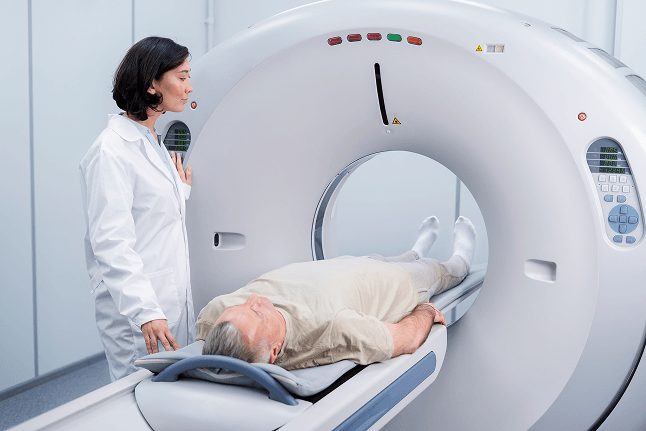
The CT Cardiac Calcium Score, also known as a coronary artery calcium (CAC) scan, measures the amount of calcium deposits in the coronary arteries. These deposits, known as plaque, can indicate an increased risk of heart or cardiovascular disease. It is a quick, non-invasive test with a CT scanner.
$290+
$505+
$1270+
*Not available at all locations. **The exact regions included in the whole-body MRI depend on the option you pick.
A CT Cardiac Calcium Score is a quick, non-invasive CT scan that measures calcified plaque in the arteries of the heart. The result is a numerical score that can help assess coronary artery disease risk and support discussions with your healthcare provider about heart health.
The Technology
During the scan, a CT machine takes detailed images of your heart. Specialized software identifies and measures calcium within the coronary arteries, producing your Coronary Artery Calcium Score. No contrast dye, needles, or medications are used.
The test is designed to detect calcified plaque only; it does not assess all heart conditions or replace routine medical care. Your results should be reviewed with your healthcare provider in the context of your overall health history and risk factors.
Please note that a CT Cardiac Calcium Score scan uses a small amount of ionizing radiation. The exact dose may vary based on the equipment and scan protocol used by the test center. This test is not suitable if you are or could be pregnant.
Your Appointment
What happens during your appointment? Arrive at the test center about 15 minutes before your scheduled appointment and follow any pre-test instructions provided. You may be asked to remove metal objects near your chest and change into a gown. A technologist will place small electrodes on your chest to coordinate the images with your heartbeat. You will lie on the CT table, which moves briefly through the scanner while you hold your breath for a few seconds. The imaging itself typically takes only a few minutes, and the full appointment is usually completed in about 15–30 minutes.
Complete your CT Cardiac Calcium Score pre-screening online before booking.
Follow the pre-test protocol. The scan will last from 10-15 minutes.
Your dashboard, a physician's report and a follow-up call with a physician.
Heart disease often develops quietly and doesn’t cause symptoms until later. A CT Cardiac Calcium Score test can reveal plaque in your coronary arteries years before a heart attack or chest pain, so you and your doctor can decide what, if anything, to do about it.
Why people choose a CT Cardian Calcium Score test
Follow the proper CT Cardiac Calcium Score testing guidelines to ensure accuracy:
A CT Cardiac Calcium Score is most useful as a snapshot of your heart health today, but it can also be repeated over time. Comparing scans over time helps you see whether plaque is building and how quickly. How often to scan is a personal decision to make with your doctor, and repeat testing isn't necessary for everyone.
Combining tests for best results
A CT Cardiac Calcium Score test focuses specifically on the coronary arteries of your heart. A Whole-body MRI screening is a natural companion if you want a broader look at your brain, organs, and other structures, and a DEXA scan can add body composition and/or bone density, which a CT Cardian Calcium Score test is not designed to measure.
Every CT Cardiac Calcium Score test with Fitnescity Health includes:
Results are available within 2 business days of your scan.
Fitnescity Health scans are for personal wellness only, and are not for use in diagnosing illness or disease. Calcium score results are a starting point for a conversation with your physician about your heart health.
A CT Cardiac Calcium Score test focuses on one area: the coronary arteries that supply blood to your heart. Your score reflects the total amount of calcified plaque found in these arteries. Descriptions below are general; your report will detail your score and what it means for you.
A score of zero is reassuring, but it does not rule out every condition. It cannot detect soft, non-calcified plaque, which is more common in younger people and smokers, so keep up with your regular checkups and your physician's recommended screenings.
The CT Cardiac Calcium Score test, also known as a Coronary Artery Calcium (CAC) scan, measures the amount of calcium deposits in the coronary arteries. These deposits, known as plaque, can indicate an increased risk of heart or cardiovascular disease. It is a quick, non-invasive test with a CT scanner.
By booking with Fitnescity Health, you receive easy-to-understand digital insights, a personalized dashboard that allows you to view your progress over time, and a physician follow-up call so you can go over your results in depth.
Yes, a physician referral is required in order to get a CT Cardiac Calcium Score test. However, we know that going to the doctor can be time-consuming and expensive, so we are happy to provide referral orders for our customers at no additional cost!
Fitnescity Health CT Cardiac Calcium Score tests prices vary by location. Visit our location finder to find a scan near you.
A CT Cardiac Calcium Score test uses a quick CT scan to look for calcified plaque in the arteries of your heart, often years before symptoms appear. Your results come with a personal dashboard, plain-language explanations, physician report, and the option to talk your results through with a physician. It's a screening, not a diagnosis, so your score is a starting point for a conversation with your physician.
You will arrive at the test center 15 minutes prior to your appointment. Upon arrival, the center will provide any necessary paperwork and bring you back to their testing space. After changing into a hospital gown, if necessary, and removing any metal from your chest area, you will lie down on the CT scanner bed, and electrodes will be placed on your chest to monitor your heart rhythm. During the scan, the technician will ask you to hold your breath for a few seconds at a time. The scan itself takes about 10 to 15 minutes, and the full appointment lasts about 30 minutes.
After your CT Cardiac Calcium Score test, you will receive access to your personalized Fitnescity Health dashboard where you can review your score and learn what it means for your heart health.
We recommend wearing comfortable clothes, such as gym attire. Do not wear any items with metal or hard plastic, such as buttons or zippers. You may be given a gown to change in to.
The scan takes about 10 to 15 minutes, and the full appointment lasts about 30 minutes.
How often to test is a decision to make with your physician, and repeat testing isn't necessary for everyone. Because calcium builds up slowly, a calcium score is not typically repeated every year.. Your first test is your baseline, and later tests show whether plaque has progressed.
Anyone who is looking to take control of their heart health and better understand their risk of heart disease should look into getting a calcium score test, regardless of fitness level. It's especially worth considering if you're over 40 or have risk factors like high cholesterol, high blood pressure, diabetes, or a history of smoking.
One of the biggest concerns that people have about CT Cardiac Calcium Score tests is safety in terms of radiation. A CT Cardiac Calcium Score test has a low to moderate radiation level. It gives a bit more radiation than a few X-rays but much less than a full CT scan. The typical radiation dose is around 1 to 3 millisieverts (mSv). For context, natural background radiation from just living on Earth is about 3 mSv per year. For most people, the benefit outweighs the small risk, especially if you have risk factors for heart disease.
Although the CT Cardiac Calcium Score test is painless and noninvasive, it’s not suitable for everyone. It is not recommended for most people under the age of 40 or over 75 years old. The test isn’t suitable for pregnant women and people who are unable to stay still for 10 to 15 minutes.
No. The CT Cardiac Calcium Score test is painless. You will lie still on a table with electrodes on your chest while the machine takes images, and you'll be asked to hold your breath for a few seconds at a time.
The CT Cardiac Calcium Score test is not right for everyone. Because it uses radiation, you will not be eligible if you are pregnant or think you might be. The test is also not suitable if you already have known heart disease, such as a prior heart attack, stents, or bypass surgery. Your pre-screening will flag these.
No. The CT Cardiac Calcium Score test is a non-contrast test.
No, you will be asked to remove your shoes for the duration of your CT Cardiac Calcium Score test.
Fitnescity Health scans are for personal wellness only, and are not for use in diagnosing illness or disease.